Walk into a sporting goods store or open an online padel shop for the first time and the racket wall alone can talk a beginner out of buying anything. Round ones, teardrop ones, diamond ones, options priced anywhere from $40 to $450, and spec sheets full of foam densities and carbon percentages that mean nothing until someone explains them. Padel is one of the fastest-growing racket sports around, sitting alongside pickleball as the two paddle sports pulling in the most first-time players right now, and it shows up constantly on roundups of the best hobbies for men in their 20s thanks to how social and easy to pick up it is.
Disclosure: some links on this page are Amazon affiliate links. As an Amazon Associate I earn from qualifying purchases.
If you’re still deciding between the two paddle sports, our breakdown of simple pickleball rules is a useful comparison point, and if padel itself, the rules, the scoring, the courts, is still new territory, our full padel for beginners guide covers that ground. This article stays narrowly focused on the racket, what it actually costs, what the shapes and materials change, and what a beginner genuinely needs versus what a sales page wants them to think they need.
Beginners should look for a round-shaped racket with a fiberglass or fiberglass-dominant face and soft EVA foam, priced between $60 and $120. Skip anything under $40 (it won’t hold up past a few sessions) and skip anything over $200 (it’s built for a swing most beginners don’t have yet). If there’s any doubt padel is a long-term hobby, rent a racket at the club for the first three or four sessions before buying anything at all.
For the full range of hobbies beyond racket sports, browse our master list of interests and hobbies.
Table of Contents
- Padel Racket Prices at a Glance
- Racket Shapes Explained
- Materials and What They Change
- What Beginners Actually Need vs Marketing
- The Rest of the Kit
- Common Buying Mistakes
- FAQ: Padel Racket for Beginners
Padel Racket Prices at a Glance
Padel racket prices spread out more than the sport’s low barrier to entry might suggest, and the price mostly tracks two things, how stiff the face material is and how much of the racket is actually carbon rather than fiberglass. Here’s a conservative breakdown of what each tier actually gets a buyer.
Entry level ($50 to $100)
Entry-level rackets use a fiberglass face over a soft EVA foam core, almost always in a round shape. They flex more on contact, which does some of the work of generating pace and forgives off-center hits that would sting on a stiffer frame. Adidas, Nox, and Head all sell beginner-tier rackets in this range, and a $70 to $90 racket from an established brand will comfortably last a first season of casual play. Anything much below $50 starts cutting corners on resin and foam quality, which shows up quickly as a racket that feels dead within a few months.
Mid range ($100 to $200)
This is where most brands put their most popular all-around rackets, and it’s also where fiberglass starts blending with partial carbon layers or a firmer EVA foam. Babolat, Bullpadel, and Nox all have well-reviewed teardrop-shaped rackets in this band, aimed at a player who has a season or two of padel behind them and wants more pop without jumping straight to a full-carbon frame. Most players who stick with the sport end up here for their second racket, once an entry-level model has taught them what they actually want out of a frame.
Premium ($200 to $400 and up)
Premium rackets are built almost entirely from carbon fiber, often in a diamond shape, with a stiffer, denser foam core designed to return maximum energy on a hard, well-timed hit. That stiffness is exactly the problem for a beginner, since it punishes mishits instead of absorbing them, and it demands a level of technique and arm conditioning most new players don’t have yet. Adidas Metalbone, Bullpadel’s elite-tier frames, and Nox’s AT series all live in this range, and they’re genuinely excellent rackets, just not for someone still learning where the sweet spot is.
Racket Shapes Explained
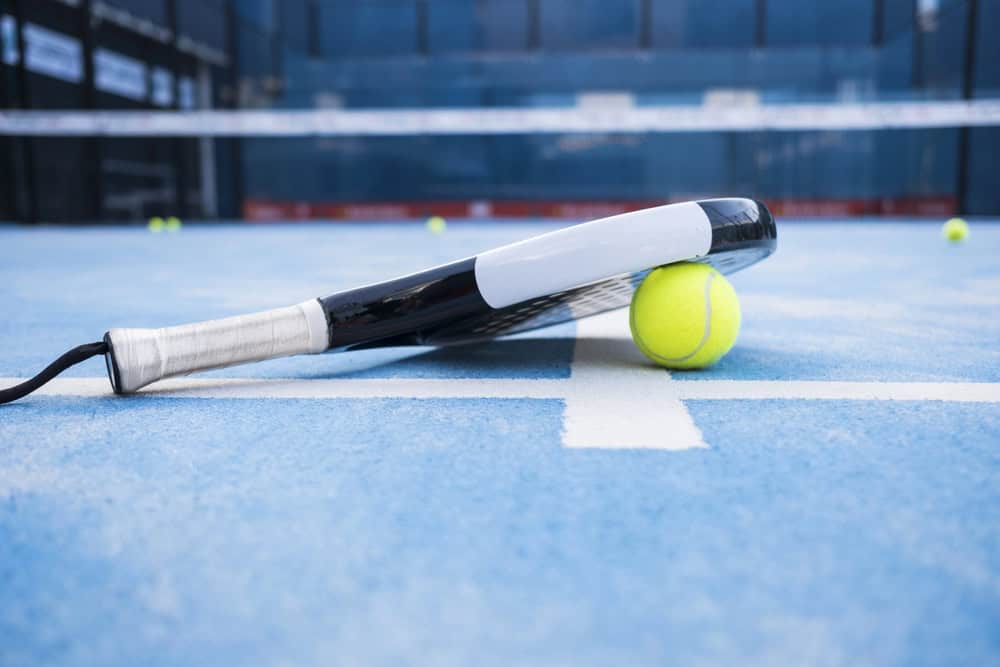
Shape affects where the sweet spot sits on the face, and it has a bigger effect on a beginner’s game than material does. There are three shapes worth knowing.
Round. The sweet spot sits low and centered across the whole face, which means the racket performs about the same whether contact lands dead center or a little off it. That consistency is exactly what a beginner needs while still learning to time shots, and round rackets are also the lightest and most maneuverable of the three shapes, which helps at the net where reaction time matters more than power. Nearly every brand’s dedicated beginner model is round for this reason.
Teardrop. The sweet spot moves up and narrows slightly, trading some forgiveness for more pop on a well-struck ball. It’s a genuine middle ground, and it’s usually the shape players move to once they can consistently find the center of the racket, generally after six months to a year of regular play.
Diamond. The sweet spot sits highest on the face and is the smallest of the three shapes, concentrating weight toward the top of the racket for maximum smash power. That same weight distribution makes diamond rackets head-heavy and unforgiving on mishits, and combined with a stiff carbon face, it’s a common cause of the elbow and forearm soreness new players end up blaming on padel itself rather than on the racket they picked.
For a first racket, round isn’t a compromise. It’s the correct choice, and moving to teardrop or diamond later is a sign of progress, not something to rush into.
Materials and What They Change
The face of a padel racket is built from one of two materials, or a blend of both, and it’s the single biggest factor in how a racket feels on contact.
Fiberglass is softer and more flexible. It flexes slightly on impact and springs back, which does some of the work of generating ball speed and takes the sting out of hits that land away from center. That flex is exactly why fiberglass dominates the entry-level tier. It’s genuinely more comfortable and more forgiving for anyone still building consistent technique.
Carbon fiber is stiffer and returns energy faster and more directly, which translates into more power on a clean hit but also more vibration transferred straight into the wrist and elbow on a mishit. Full carbon faces show up almost exclusively on mid-range and premium rackets aimed at players who can already control where the ball leaves the racket.
Most rackets actually blend the two, describing themselves as a percentage of carbon over fiberglass. A racket that’s mostly fiberglass with a thin carbon layer gets some added pop without losing the forgiving flex that makes fiberglass rackets comfortable to learn on.
Underneath the face sits a foam core, almost always EVA foam, and its density matters as much as the face material does. Soft, low-density EVA foam compresses more on contact, acting like a small trampoline that absorbs the ball’s energy and reduces the shock that travels into the arm. Harder, high-density EVA foam compresses less and returns energy faster, which again means more power for players who can generate their own pace, and more arm strain for players who can’t yet.
Beginner rackets almost universally pair soft EVA foam with a fiberglass face for exactly this reason. Both choices point the same direction, comfortable and forgiving over powerful and demanding.
Weight and balance point round out the picture. Beginner rackets typically weigh 350 to 375 grams, light enough to control at the net without early fatigue, while heavier options mostly benefit players who already generate power through technique rather than racket weight. Balance point matters just as much as total weight.
A low or neutral balance keeps more weight toward the handle, making a racket feel lighter and quicker to swing, while a high, head-heavy balance, common on diamond rackets, adds smash power at the cost of maneuverability. For a first racket, lighter and more neutrally balanced beats heavier and head-heavy every time.
What Beginners Actually Need vs Marketing
Racket marketing leans hard on pro endorsements and spec sheets listing carbon percentages down to the decimal, and almost none of it is relevant to a first purchase. Here’s what actually matters, in order.
- Shape. Round, no exceptions for a true beginner.
- Face material. Fiberglass or a fiberglass-dominant blend.
- Foam density. Soft.
- Weight. 350 to 375 grams.
- Price. $60 to $120 covers a genuinely good beginner racket from a real brand; paying more mostly buys marketing, not performance a beginner can use yet.
What doesn’t matter yet: the specific pro player whose signature is on the racket, whether the frame is labeled tour level, and whether it’s the newest release in a brand’s lineup. A padel racket that’s a season or two old and on sale performs identically to the current release wearing the same specs. None of the touted extras, textured faces for spin, unusual hole patterns, price tags north of $150, make a measurable difference for someone who hasn’t yet developed a repeatable swing.
Before spending anything, it’s worth testing the sport itself. Most padel clubs rent rackets for a few dollars per session, and playing three or four sessions on rentals before buying does two useful things. It confirms padel is worth the investment, and it gives a beginner enough court time to notice their own preferences, lighter versus a bit heavier, more control versus a bit more pop, before spending real money on a racket that matches nobody’s game but a stranger’s marketing copy. Padel’s low cost of entry is a big part of why it keeps landing on lists of hobbies worth trying in the first place, and renting first keeps that low-cost reputation honest before any money goes toward a racket.
The Rest of the Kit
Balls. Padel balls look like tennis balls but carry slightly less internal pressure to suit the smaller, walled court. A can of three runs about $6 to $10, and a beginner playing regularly should expect to replace balls every few sessions, since they lose bounce faster than tennis balls do.
Grip and overgrip. Most rackets ship with a usable base grip, but a $3 to $8 overgrip wrapped on top gives fresh tackiness and sweat absorption, and it’s cheap enough to replace every month or two of regular play. This is the single highest-value upgrade for the money in the entire sport.
Shoes. This is the one honest exception to renting first. Padel courts use artificial turf-like surfaces that demand more lateral grip and quicker directional changes than a hard tennis court, and a flat-soled running shoe can genuinely slip. That said, showing up to a first session or two in tennis shoes or another court shoe with decent tread is fine and won’t ruin anything.
What isn’t a good substitute is a running shoe with a soft, cushioned sole built for forward motion, since padel’s constant sideways and backward movement is exactly what that kind of shoe isn’t built for. If padel sticks past a few sessions, a dedicated pair of padel shoes ($50 to $100) is worth the upgrade before a new racket is.
Bag. Entirely optional at the start. A gym bag holds a racket, balls, and a water bottle just fine. Dedicated padel bags ($40 to $130) add a ventilated shoe compartment and padded racket protection, which matters more once someone owns a racket worth protecting than it does on day one.
Common Buying Mistakes
Buying diamond because it looks powerful. The smash appeal is real, but a small, high sweet spot on a stiff carbon face punishes the exact inconsistency every beginner has. It’s the single most common regret among new padel players who bought the flashiest racket on the wall.
Going below $40 to save money. Ultra-cheap rackets use low-grade resin and foam that loses its pop within weeks, not months, and inconsistent manufacturing means two rackets from the same cheap batch can feel noticeably different from each other. The savings disappear the first time the racket needs replacing after a single season.
Copying a friend’s racket. A racket that suits a friend’s height, strength, and playing style isn’t automatically right for a beginner just because it worked for them. Shape and weight should match the player buying the racket, not the player who recommended it.
Overspending on a first racket to grow into. A $300 carbon racket doesn’t make technique arrive faster, and a stiff, unforgiving frame in the hands of someone still learning where the sweet spot is tends to slow progress and cause arm soreness rather than prevent a future upgrade.
Skipping the rental phase entirely. Buying before trying even once means guessing at preferences with no court time to base the guess on. A few rental sessions cost less than the difference between a $70 racket and a $150 one, and they turn that choice into an informed decision instead of a gamble.
Padel Racket for Beginners, in Short
A first padel racket doesn’t need to be expensive or advanced to be right. Round shape, fiberglass or fiberglass-dominant face, soft EVA foam, and a weight around 350 to 375 grams covers what actually matters, and $60 to $120 buys a genuinely good version of that combination from an established brand. Rent for a few sessions first if there’s any doubt padel is a long-term hobby, add a $10 can of balls and a $5 overgrip, and save the padel-specific shoes and the carbon, diamond-shaped upgrade for once the sport has proven itself worth the investment.
Everything past that point is a decision for a second racket, not a first one. For everything else about getting into the sport, court types, and how a match actually works, see our complete padel for beginners guide, or brush up on padel rules for beginners before your first game.
FAQ: Padel Racket for Beginners
How much should I spend on my first padel racket?
Plan on $60 to $120 for a round-shaped, fiberglass-face racket from an established brand like Adidas, Nox, Head, or Babolat. That range covers a racket that will comfortably last a first season of regular play without the stiffness and cost of a mid-range or premium frame built for players with more developed technique.
Can I play padel with a tennis racket?
No. A tennis racket has strings and a completely different swing weight and length, while padel rackets are solid, stringless paddles with holes through the face. There’s no meaningful substitute, so if a beginner doesn’t own a padel racket yet, renting one at the club is the standard and easiest option.
What shape padel racket is best for beginners?
Round. It has the largest, most centered sweet spot of the three shapes, which means mishits still perform reasonably well while a beginner is learning to consistently find the center of the racket. Teardrop and diamond shapes trade that forgiveness for more power and suit players with a season or more of experience.
Do I need padel shoes to start playing?
Not for the first few sessions. Tennis shoes or another court shoe with decent lateral grip will get a beginner through early play safely. Padel’s artificial turf-like courts do reward the extra grip and lateral stability of dedicated padel shoes, so it’s worth budgeting $50 to $100 for a pair once it’s clear padel is going to be a regular thing.