You have decided to try padel. Maybe a friend dragged you to watch a match, maybe you saw the enclosed glass courts popping up at a tennis club nearby, or maybe pickleball got you curious about paddle sports in general.
Whatever got you here, the next two questions are always the same. Where do you actually play, and what happens once you show up. This guide answers both, from finding a court that has an open slot this week to knowing what your first hour on court will actually feel like.
Download the Playtomic app, drop a pin on your location, and book an open match or a court at the nearest club, since Playtomic runs booking for the overwhelming majority of padel clubs in the country. Expect to pay somewhere around $15 to $25 per person for a 90 minute session, wear court shoes with a non marking sole, and expect to be rallying, badly but genuinely, within your first hour. Padel’s whole reputation as an easy sport to fall in love with comes from exactly that, a fast, forgiving learning curve that gets new players hitting real shots almost immediately.
For the full range of hobbies worth trying beyond racket sports, browse our master list of interests and hobbies. If you also want padel picked apart as a hobby on its own, from cost to difficulty to whether it fits your schedule, our padel for beginners guide covers that ground in more depth than this article does.
Table of Contents
- Where Padel Courts Actually Are
- How to Find a Court Near You
- Booking Your First Session
- What to Bring and Wear
- What Your First Hour Will Feel Like
- Etiquette Basics
- FAQ: Padel Courts and Your First Session
Where Padel Courts Actually Are
Padel is still catching up to the rest of the world in the United States, so the honest starting point is that not every city has a court yet, but the map is filling in fast. Florida has the deepest bench of clubs by a wide margin, largely thanks to its Spanish and Latin American population who grew up with the sport already, and Texas is close behind and adding courts as quickly as anywhere in the country. California and the New York metro area round out the four biggest markets, with clusters in Los Angeles, Miami, Houston, Dallas, and the boroughs and suburbs around New York City. Chicago, Charlotte, and a handful of other mid-size metros are adding their first clubs too, so the picture keeps changing even season to season.
A lot of the newest courts are not standalone padel facilities at all. Existing tennis and racket clubs, the kind that have run pickleball and tennis programs for years, are converting a court or two to padel because members keep asking for it, and country clubs have followed the same pattern. That matters for your search, because a club near you might have padel courts without padel being the first thing that shows up when you search the club’s name. It is worth checking any racket or tennis club within driving distance directly, not just relying on apps built specifically for padel.
How to Find a Court Near You
Finding a court is mostly a matter of knowing where to look first, since one app has become the default booking system for nearly the entire sport in the US.
1. Download Playtomic. It is free, available on iOS and Android, and it is the single best starting point because most US padel clubs run their court reservations through it. Open the app, allow location access, and it will surface every bookable padel club within range, along with prices and open time slots.
2. Filter by padel specifically. Playtomic also lists tennis and pickleball, so make sure the sport filter is set correctly before you start scrolling clubs.
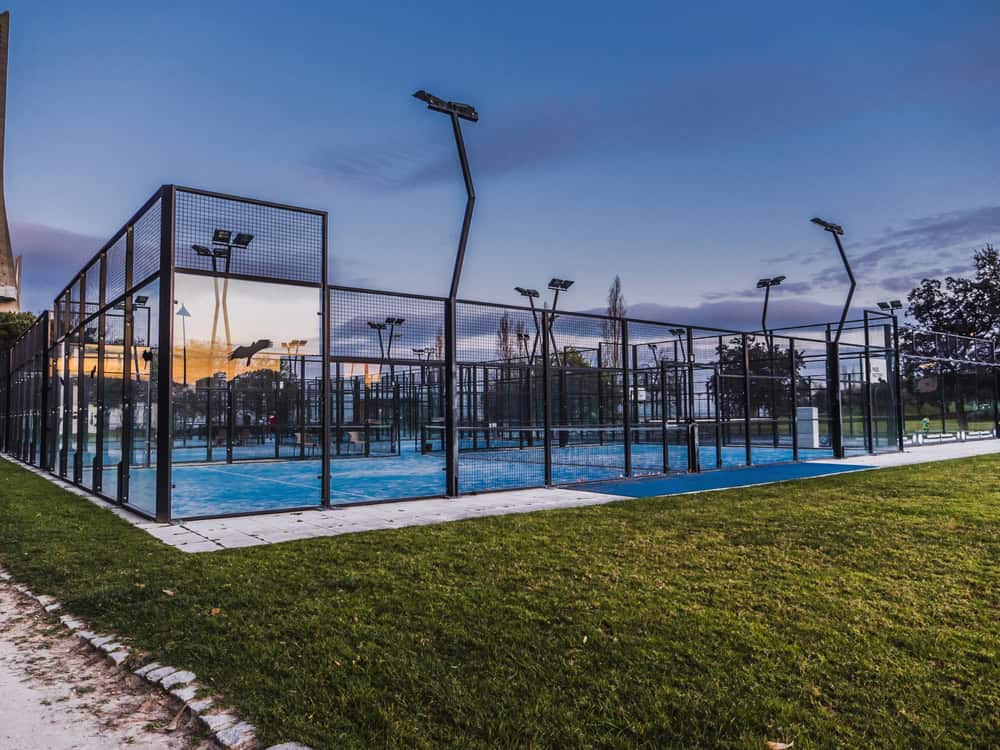
3. Check court photos and reviews inside the app. Indoor versus outdoor, panoramic glass versus mesh fencing, and general upkeep vary a lot between clubs, and the app usually has enough photos and ratings to get a feel before you book.
4. Search club websites directly, especially tennis and racket clubs. Not every facility keeps its Playtomic listing current, and some clubs handle padel bookings through their own membership system instead. A quick search for “padel” plus your city, or a look at the amenities page of tennis clubs near you, catches courts the app might miss.
5. Try a plain Google Maps search as a backup. Searching “padel courts near me” directly in Maps will often surface a club that has not built out a full Playtomic presence yet, particularly in newer markets.
6. Ask in local Facebook or WhatsApp groups if you are in a smaller market. Padel communities in cities with only one or two courts tend to organize informally, and current players usually know about openings, private courts, or new clubs before they show up in any app.
Once you find a club, treat the first booking as a scouting trip as much as a game. Clubs vary in surface type, ball quality, and how busy peak hours get, and it usually takes a visit or two to find the one that becomes your regular spot.
Booking Your First Session
There are two very different ways to book your first time on court, and picking the right one matters more than most beginners realize.
Booking a private court with friends means you reserve the whole court for a set time, split the cost between however many of you show up, and play at whatever pace and skill level your group happens to be. This is the lower pressure option if you already have three other people willing to try it, since nobody is watching a beginner fumble the first few rallies except other beginners.
Joining an open match means the club or the app fills the other three spots on the court with strangers, matched loosely by self-reported skill level. This is genuinely the best option for someone without a built-in group, and it is one of the features that makes padel easier to start alone than most racket sports. Clubs and coaches almost universally describe padel as a social sport first, so showing up solo to an open match is normal, not awkward.
Every player entering the Playtomic system for the first time gets asked to self-rate on a scale that generally runs from about 1.0 at the very beginning up through the mid 5s and beyond for competitive players. Rate yourself honestly and low if you have never played. Level 1.0 to 1.5 covers players who are still building basic hand-eye coordination and have not rallied consistently yet, which is exactly where almost everyone starts. The rating exists so open matches can group similar skill levels together, and it adjusts automatically as you play more and the system, or the people you play against, has a better read on you.
Many clubs also run intro clinics or beginner classes, usually an hour with a coach and two to four other new players, that cover grip, the underhand serve, and how the walls work before anyone gets thrown into an open match with strangers. If a club offers one, it is worth doing before or instead of your very first open match, since it takes the edge off walking onto a court with zero frame of reference.
On cost, expect court rental in the range of $20 to $40 per hour split between four players, or a flat per person rate at open play sessions that usually lands between $15 and $25 for around 90 minutes. Clinics tend to run a bit higher since a coach’s time is included. Rackets are almost always available to rent for $5 to $10 if you do not own one yet, and most clubs supply balls, though it is worth confirming before you book.
What to Bring and Wear
Padel does not demand much specialized gear for a first session, which is part of why it is an easy sport to try on a whim.
Shoes matter more than anything else you wear. Court shoes built for padel or tennis, with a herringbone or omni tread pattern and a non marking sole, give you the grip and lateral support the sport’s constant stopping and changing direction demands. Running shoes are not a good substitute, they are built for forward motion and tend to slip or strain your ankles on the quick side to side movement padel requires. Indoor facilities in particular usually require non marking soles, so check before you show up in your everyday sneakers.
Clothing should be breathable and stretchy. Gym gear or a tennis style outfit both work fine, shorts or leggings that let you move freely, and a shirt you would not mind sweating through, since padel gets more physical than it looks from outside the glass. Skip jeans, skip anything restrictive, and skip sandals entirely.
Bring water, and bring a racket only if you own one. If you do not have a racket yet, do not buy one before your first session. Rent one at the club for a few dollars and find out whether you actually like the sport before spending money on gear. A wristband, a cap, and a small towel are nice extras for longer sessions but nowhere close to necessary for a first visit.
What Your First Hour Will Feel Like
The single biggest reason padel spreads by word of mouth is that the first hour genuinely goes well for most people, even people who have never picked up a racket sport before. The court is smaller than a tennis court, the ball is a low pressure ball that does not fly off the paddle the way a tennis ball does, and the surrounding glass and mesh walls mean a shot that would sail out of bounds in tennis is often still in play. That combination means beginners keep points alive far longer than they expect to, and there is nothing like an unexpectedly good rally to hook a new player in the first twenty minutes.
Expect the first fifteen minutes to be a warm up, easy volleys back and forth to get a feel for the paddle and the ball. The underhand serve, hit below waist height into a diagonal service box, takes a few tries to get consistent, but it is a far smaller technical hurdle than a tennis serve. The genuinely new skill is learning to read the walls, since a ball that bounces off the back glass is still very much in play, and instinctively treating it as out is the most common rookie mistake in the sport.
By the thirty to forty five minute mark, most first timers are stringing together short rallies, and by the end of the hour, real points with real strategy, even simple strategy like getting to the net, start to happen. Nobody expects a beginner to look polished. The whole appeal of that first hour is how quickly it stops feeling like pure chaos and starts feeling like an actual game.
Etiquette Basics
A short list of unwritten rules will make your first session smoother and mark you as someone worth inviting back.
Arrive five to ten minutes early. Courts are booked in tight blocks, and showing up right at your start time eats into everyone’s playing window while you change shoes and warm up.
Call the ball on anything close. Say “mine” or “yours” the moment a ball looks remotely ambiguous. The player closest to it usually has priority, but a verbal call prevents the collision, or the missed shot, that happens when two players both go for the same ball in silence.
Remember the walls are in play. A ball that bounces off the glass or mesh after touching the court is still live. Calling it out because it hit a wall is the fastest way to look like a first timer, and experienced players will correct it gently the first time and less gently after that.
Rotate and include newer players at open matches. If you are playing open play with strangers, expect a friendly, welcoming atmosphere, and return the favor. A genuine “great shot” when a beginner pulls off something unexpected costs nothing and is a real part of the culture around the sport.
Keep the pace moving. Long pauses between points, extended ball retrieval trips, or excessive chatting between serves eat into everyone’s court time, especially at busy clubs with a hard stop for the next booking.
None of this is complicated, and clubs know that everyone was a beginner once. Showing basic awareness on your first visit goes a long way toward getting invited into a regular group.
Padel also shows up regularly on broader roundups of hobbies worth trying as an adult, including our lists of the best hobbies for guys and the best hobbies for men in their 20s, largely because it is social, easy to learn, and does not demand a huge time or money commitment to find out if you like it.
Getting on Court Is the Whole Trick
Padel has a lower barrier to entry than almost any other racket sport, but the barrier that does exist is entirely logistical, finding a court and working up the nerve to book a first session with people you have never met. Once that part is handled, the sport does the rest of the work itself. Download Playtomic, find a club within reach, book an open match or a beginner clinic, show up in real shoes, and give it one honest hour. For a deeper look at the sport itself, technique, common beginner mistakes, and how to keep improving after your first few sessions, our full padel for beginners guide is the natural next stop.
FAQ: Padel Courts and Your First Session
How much does a padel session cost?
Court rental generally runs $20 to $40 per hour split between four players, and open play sessions usually charge a flat per person rate somewhere between $15 and $25 for about 90 minutes. Racket rental adds another $5 to $10 if you do not own one yet, and most clubs include balls in the price.
Can I play padel without a partner?
Yes. Joining an open match through an app like Playtomic fills the other three spots on the court with other players, roughly matched by self-reported skill level, which is exactly how most beginners get their first games without needing a built-in group of friends.
Do I need my own racket for my first padel session?
No. Rent one at the club for a few dollars until you know whether you like the sport. Buying a racket before a first session is one of the most common unnecessary expenses new players run into.
What if there is no padel club near me yet?
Check tennis and racket clubs in your area directly, since many are adding one or two padel courts without heavily marketing it, and search Playtomic and Google Maps periodically since new clubs keep opening in markets that had none a year or two ago. If nothing is close, some clubs and coaches occasionally travel to run pop-up clinics in growing markets, which is worth a quick search as well.