If you keep hearing both “padel” and “pickleball” mentioned in the same breath and cannot quite picture what separates them, you are far from alone. Both are doubles friendly racket sports that exploded in popularity around the same time, both use a paddle instead of a strung racket, and both get pitched to beginners as easier than tennis. That overlap is exactly why people mix them up, and it is also where the similarities mostly end.
Pickleball is played on an open, badminton sized court with a solid perforated paddle and a plastic wiffle style ball, using a serve and rally system where only the serving side scores. Padel is played on a smaller enclosed court where glass and mesh walls stay in play, using a solid foam paddle and a low pressure ball closer to a tennis ball, with tennis style scoring. Pickleball is cheaper to try and far easier to find a court for in most of the United States. Padel is more physically demanding and has a steeper learning curve because of the walls.
Here are the five biggest differences between the two sports:
- Court: pickleball is played on an open court with no walls in play, padel is played inside an enclosed court where the glass and mesh walls are part of the game
- Ball: pickleball uses a hard plastic ball full of holes, padel uses a depressurized rubber ball that looks and feels close to a tennis ball
- Paddle: pickleball paddles are light, flat, and unperforated, padel paddles (called palas) are heavier, foam cored, and covered in small holes
- Scoring: pickleball games go to 11 with only the serving side able to score, padel uses tennis style scoring (15, 30, 40, game) with a golden point at deuce
- Access: pickleball courts are common and often free at public parks, padel courts are far fewer and almost always paid
For the full range of hobbies beyond racket sports, browse our master list of interests and hobbies.
Table of Contents
- What Each Sport Actually Is
- Court and Equipment
- Rules and Scoring
- Cost to Start
- Difficulty and Fitness
- Availability Near You
- Which One Should You Try?
- FAQ: Padel vs Pickleball
What Each Sport Actually Is
Pickleball is a paddle sport played on a court about the size of a badminton court, with a low net and a strip near the net on both sides called the kitchen, where players are not allowed to hit the ball out of the air. It was built as an easy entry point into racket sports, with simple rules, a slower ball, and a small enough court that beginners can rally within their first few minutes.
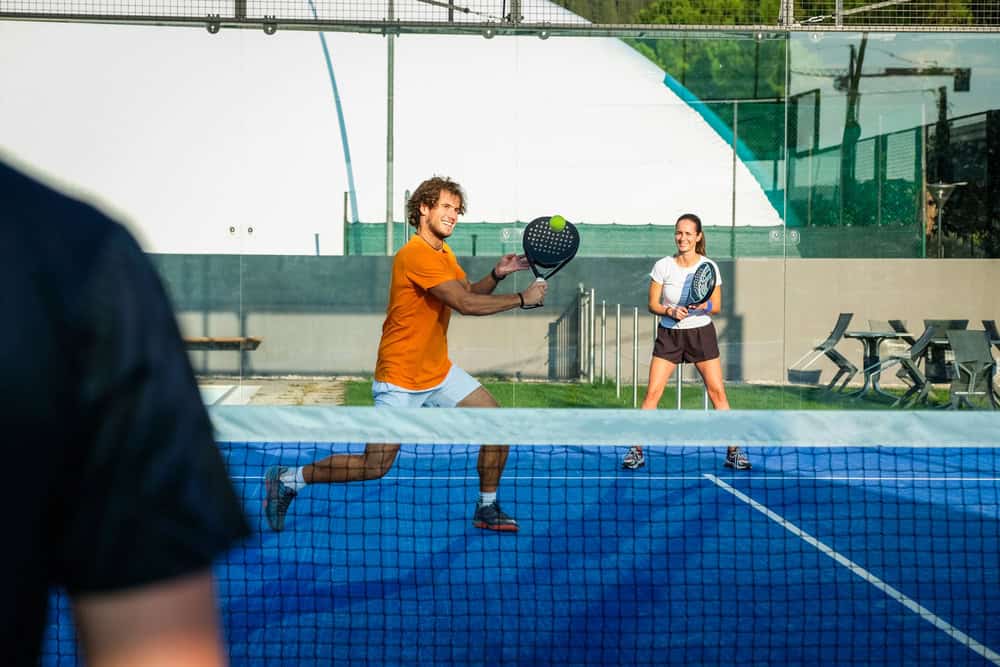
Padel is a doubles only paddle sport played inside an enclosed court surrounded by glass panels and metal mesh, roughly a quarter the size of a tennis court. The walls are not a hazard to avoid, they are part of the strategy, since the ball can bounce off the back and side walls and stay in play. Padel borrows its scoring from tennis but keeps the court small enough, and the paddle forgiving enough, that new players can keep a point going almost immediately. For a full breakdown of padel on its own, our padel for beginners guide covers the sport in more depth.
Court and Equipment
The court is the single biggest difference between these two sports, and almost everything else follows from it.
A pickleball court measures 20 feet by 44 feet, which is the same footprint as a doubles badminton court, and it has no walls in play. Hit the ball out of bounds and the point is over. The court is usually outdoors on a hard surface similar to a tennis court, often repurposed from old tennis or basketball courts, which is a big reason pickleball courts have spread so fast.
A padel court measures about 20 meters by 10 meters (roughly 66 feet by 33 feet), enclosed on all sides by glass and mesh walls, with a net in the middle set at a similar height to a tennis net. The ball can rebound off the back and side walls and remain in play, similar to squash, which turns rallies into a mix of paddle strokes and wall shots. Because of the enclosure, padel courts have to be purpose built, which limits how quickly new courts can go up.
Equipment follows the same split. Pickleball paddles are light, flat, rectangular, and made from composite, graphite, or wood, without holes in the face. Padel paddles (palas) are solid, foam cored, noticeably heavier, and covered in small perforations that reduce air resistance and add spin.
You cannot swap the two. A pickleball paddle is not legal or practical on a padel court, and a padel paddle is oversized and mismatched for pickleball’s faster paced net game.
The balls differ just as much. A pickleball is a hard plastic ball covered in holes, similar to a wiffle ball, and it is loud, light, and slower through the air. A padel ball looks almost identical to a tennis ball but is intentionally depressurized, so it bounces less and moves a bit slower than a regulation tennis ball, while still feeling firmer and heavier in hand than a pickleball.
Rules and Scoring
Both sports serve underhand, and that is close to where the similarity in rules ends.
In pickleball, the serve is hit underhand and below the waist, diagonally into the opposite service box, with one attempt per serve. Traditional pickleball uses side out scoring, meaning only the serving side can add to its score, games are typically played to 11 points, and a team must win by two. Newer formats have experimented with rally scoring where either side can score on any point, but side out scoring is still the standard most beginners will encounter at a public court.
In padel, the serve is also underhand and hit below the waist, but the ball must first bounce once on the server’s own side before being struck, and the serve must land diagonally in the opposing service box. Each server gets two attempts, similar to tennis. Padel uses full tennis scoring: 15, 30, 40, game, with sets won at six games (win by two).
The one shortcut padel adds is the golden point. When a game reaches deuce, instead of playing advantage back and forth like tennis, padel plays a single sudden death point to decide the game, which keeps matches from dragging.
The other structural difference is the no volley zone. Pickleball has the kitchen, a 7 foot strip on each side of the net where players cannot hit the ball out of the air, which forces a slower, more tactical game near the net. Padel has no such zone. Players actively want to move up to the net together as a team, and volleys close to the net are a normal, encouraged part of the game.
Cost to Start
Pickleball is the cheaper sport to try by a wide margin, and that gap holds up whether you are talking about a single afternoon or a full year of regular play.
A pickleball paddle for a beginner runs $50-150, and plenty of public parks and recreation centers offer free or low cost court time, sometimes with paddles available to borrow. A pack of balls costs about $10-20 and lasts a long time since the plastic construction holds up well. At a private club, court time might run $10-25 an hour, but a huge share of pickleball in the United States happens on free public courts.
Padel costs more at every step. A single session, if you rent a paddle and just pay for court time, typically runs $15-40 per person, since padel court time usually costs $30-80 an hour split between four players. A beginner padel racket runs $70-150, similar to pickleball paddle pricing, but you will almost never find a free padel court the way you can find a free pickleball court at a public park. Many padel clubs also run beginner clinics for $20-40 per person that include a coach and loaner gear, which is a smart way to try the sport before buying anything.
Neither sport requires much beyond the paddle and a decent pair of court shoes with lateral support, which run $50-120 for either sport. Skip running shoes for both. The side to side movement in both games raises your risk of rolling an ankle in shoes built for forward motion only.
Difficulty and Fitness
Pickleball has the shorter learning curve of the two. The court is small, the ball is slow, and the rules are simple enough that most beginners can play a fun, competitive game within their first hour. It is also easier on the joints than padel, tennis, or squash, since there is less ground to cover and the slower ball gives you more time to react, which is a big part of why it has become popular with older adults and people managing joint issues.
Padel takes longer to feel comfortable with, mostly because of the walls. Reading a rebound off the glass or mesh and turning it into a usable shot takes real practice, and it is a skill pickleball and tennis do not really prepare you for. Padel also tends to be more physically demanding. The court is bigger than a pickleball court, rallies run longer because the walls keep points alive, and a lot of players cover more ground per point than they would in pickleball.
Neither sport comes close to tennis in terms of physical demand or technical difficulty, and that is by design. Both were built to lower the barrier to entry for racket sports. But between the two, pickleball is the easier sport to pick up on day one, and padel is the more physically demanding sport once you are past the beginner stage. If a bigger physical payoff is part of what draws you to a new hobby, padel leans that direction, and our list of adrenaline hobbies for thrill seekers has other high energy options worth a look.
Availability Near You
This is the other place where the two sports pull apart sharply, and it comes straight from the court itself.
Pickleball courts are everywhere. Parks departments across the country have been converting old tennis and basketball courts into pickleball courts for years, and dedicated pickleball facilities keep opening on top of that. In most mid sized and large American cities, finding a free or low cost public pickleball court within a short drive is realistic, and apps built specifically for finding open courts and games make it even easier.
Padel courts are far less common, though the number is growing quickly. Padel facilities in the United States are concentrated in Florida, Texas, California, and New York, with new clubs opening in other major cities as demand grows, but outside those hot spots you may need to drive a while to reach the nearest court, or join a waitlist for court time at a busy club. Booking apps and local padel or racquet clubs are the most reliable ways to find one. If you already know the basics of one of these sports and want a quick side by side while you plan your first outing, our simple pickleball rules guide and our padel for beginners guide both go deeper on their own sport.
Which One Should You Try?
There is no universal winner here. The right sport depends on what you have access to, what you can spend, and what kind of movement you enjoy.
By budget. If you want to try a racket sport for close to nothing, start with pickleball. A borrowed paddle and a free public court can get you playing the same day. Padel is not expensive by hobby standards, but you will almost always pay for court time, so budget at least $15-40 for your first session.
By location. Check what actually exists near you before anything else. If your city has padel clubs and courts within a reasonable drive, either sport is a real option. If it does not, pickleball is almost certainly the more practical choice simply because a court is more likely to already exist a few minutes from your house.
By fitness goals. If you want a lower impact, easier on the joints way to be active with friends, pickleball fits that goal well. If you want a workout that pushes your agility and covers more ground, padel will get you there faster once you are past the beginner stage.
By tennis background. If you already play tennis, padel will feel more familiar because of the scoring system and the racket sport instincts you already have, even though the wall play takes adjustment. If you have never picked up a racket, pickleball’s smaller court and simpler rules make the first hour less intimidating.
Plenty of people who try both end up playing whichever one their friend group or local court situation makes easiest, and there is nothing wrong with that. If you are torn, try whichever one you can access this week rather than waiting to find the “better” sport, since both are genuinely fun once you get a few sessions in.
Conclusion
Padel and pickleball get lumped together because they both feel like approachable alternatives to tennis, but the actual experience of playing them is different. Pickleball is cheaper, easier to find a court for, and faster to pick up. Padel is more physically demanding, has a steeper learning curve because of the walls, and currently requires more effort to access in most parts of the country.
Neither answer is wrong. The best move is to try whichever one is easiest to get to first, since a single session will tell you more than any comparison article can.
FAQ: Padel vs Pickleball
Is padel harder than pickleball?
For most beginners, yes. Padel’s enclosed court adds a skill, reading and using the wall rebounds, that pickleball does not require, and padel rallies tend to be longer and more physically demanding. Pickleball’s smaller court and slower ball make it the easier sport to feel competent at within your first session.
Can you use a pickleball paddle for padel?
No. Padel paddles are heavier, foam cored, and perforated, and they are built for a bigger court and a livelier ball. A pickleball paddle is too light and too small to control a padel ball properly, and most padel clubs will expect you to use padel specific equipment anyway.
Which sport is cheaper to start?
Pickleball, by a clear margin. Many public parks offer free or low cost pickleball courts, and a beginner paddle runs $50-150. Padel almost always requires paid court time, typically $30-80 an hour split between four players, on top of a beginner racket in the $70-150 range.
Is padel or pickleball better for older adults?
Pickleball is generally the more common recommendation, since the smaller court, slower ball, and lower impact movement are easier on aging joints. Padel is still playable at any age and plenty of older adults enjoy it, but the longer rallies and larger court make it a bit more physically demanding overall.