
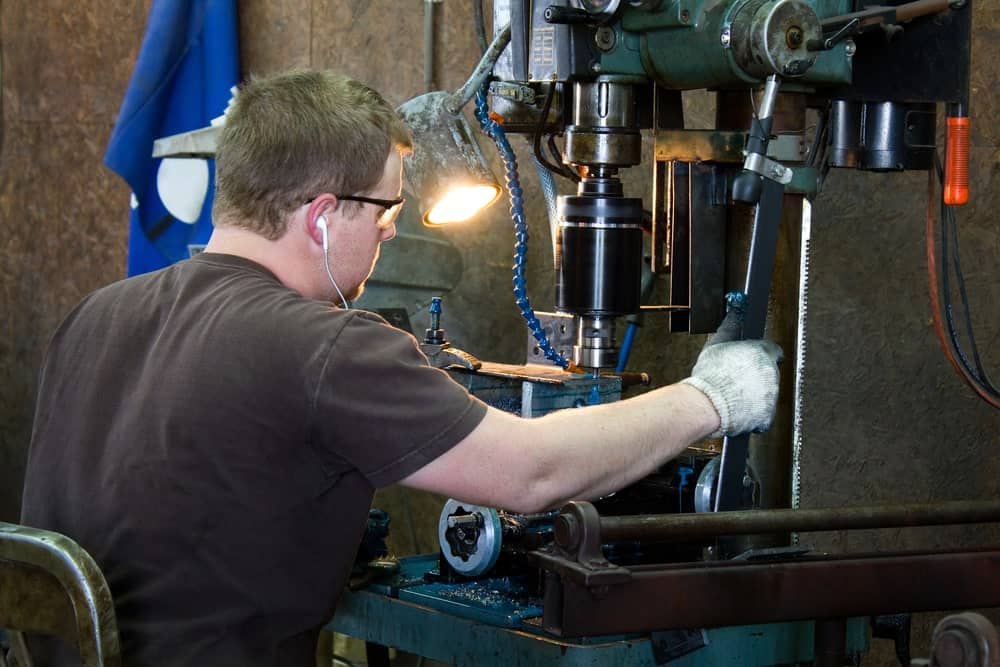
Machinists operate in manufacturing spaces and machine shops to make accurate metal, plastic, and composite parts using lathes, mills, and precision hand tools. Some hobbyists bring that same skill set into a home garage, building small parts, tools, and mechanical projects purely for their own enjoyment. This guide covers what hobby machining actually involves, what it costs to get started, and how to build skill safely.
Getting started as a hobby machinist means learning basic measurement and cutting skills, choosing a starter machine such as a benchtop lathe or mini mill, and practicing on a handful of simple projects before moving to anything complex. Most beginners spend $1,000 to $3,000 on a first machine and basic tooling, though it is possible to start smaller with hand tools and a drill press. Steady practice on small projects builds more real skill than expensive equipment does in the first year.
Disclosure: some links on this page are Amazon affiliate links. As an Amazon Associate I earn from qualifying purchases.
Table of Contents
- What Is a Hobby Machinist?
- What Does a Hobby Machinist Do?
- Is Hobby Machining a Good Fit for You?
- Choosing Your Starting Path: Lathe First or Mill First
- What a Benchtop Lathe Costs
- What a Mini Mill Costs
- Basic Tooling and Measuring Instruments
- Safety Gear Every Hobby Machinist Needs
- How to Learn the Skills
- Beginner Projects to Build Real Skill
- Where to Practice Without a Full Home Shop
- What It Really Costs to Start
- Are You Ready to Become a Hobby Machinist?
- FAQ: Hobby Machining
What Is a Hobby Machinist?
A hobby machinist changes or creates mechanical objects, tools, and parts purely for personal enjoyment rather than as a paid trade. The work involves drilling, cutting, turning, and grinding materials such as aluminum, brass, steel, and occasionally plastic or wood. Many hobby machinists build replacement parts, small hand tools, model engines, or custom fixtures for other hobbies.
This differs from professional machining, where speed and production quotas drive every decision. At home, you set your own pace, pick your own projects, and can spend an entire weekend perfecting one small part. It is a natural fit for people who already enjoy productive hobbies to do with your hands, since the payoff is always a finished, usable object.
What Does a Hobby Machinist Do?
A hobby machinist starts with a drawing or sketch, works out how to hold the material securely, and removes metal in controlled passes until the part matches the design. This might mean turning a round shaft on a lathe, cutting a flat surface or slot on a mill, or drilling and tapping precise holes for a bolt.
Measuring matters just as much as cutting. Every good machinist checks dimensions constantly with calipers, micrometers, and gauges, since a part that is off by a few thousandths of an inch often will not fit.
Many hobbyists start by fixing or modifying parts for their other hobbies, cars, bicycles, and shop tools, before designing anything from scratch. Over time, that practical repair work turns into building original projects and small inventions. The same instinct drives many electronics hobbyists, who often pick up machining skills to build enclosures and mounts for their circuits.
Is Hobby Machining a Good Fit for You?
Hobby machining rewards patience, careful measurement, and comfort with basic math like fractions and decimals. It suits people who like taking something apart mentally, figuring out how it works, and then figuring out how to make it themselves.
It also appeals strongly to anyone who already enjoys problem solving hobbies, since every project is really a series of small mechanical puzzles stacked on top of each other. If you like the planning stage of a project as much as the building stage, machining tends to click quickly.
Choosing Your Starting Path: Lathe First or Mill First
Most beginners choose between a lathe-first path and a mill-first path, and either one works. A small benchtop lathe with a 7 inch to 12 inch swing teaches turning, facing, parting, and threading, which are foundational skills for round parts like shafts, bushings, and knobs.
A mill-first path uses a benchtop mill, either manual or CNC, and teaches milling, drilling, slotting, and fixturing work, which suits flat parts, brackets, and anything with precise holes. Many hobbyists eventually own both a small lathe and a small mill, since the two machines complement each other rather than compete.
There is no wrong first choice. Pick whichever machine matches the projects you actually want to build first, and add the second machine once you have outgrown what one tool alone can do.
What a Benchtop Lathe Costs
Cost to start: a small mini lathe, in the 7 inch by 10 inch to 7 inch by 14 inch range from brands like Sherline or the common 7x mini lathe family, typically runs $1,000 to $1,500 new with a basic tooling package included.
Stepping up to a mid size 9 inch by 20 inch benchtop lathe, such as the Grizzly G4000, generally costs $2,000 to $2,400 after tax and shipping, though sales can bring that down. Larger 10 inch by 22 inch machines and up push the budget past $3,000 once shipping and freight are added.
Buying used can cut these numbers significantly. Many experienced hobbyists recommend the used market for anyone working with a firm $2,000 budget, since a well maintained older lathe often outperforms a cheaper new import.
What a Mini Mill Costs
Cost to start: a basic manual mini mill, similar to a Sieg X2 style bench mill, typically costs $700 to $1,500 new. A larger manual benchtop mill, such as a Grizzly G0704, generally runs $1,500 to $2,500.
CNC desktop mills built for hobbyists cost considerably more, usually $2,500 to $7,500, since they add stepper motors, a controller, and software on top of the mechanical machine. It is genuinely rare to find a capable CNC mill under $2,500, so many beginners start manual and add CNC conversion parts later.
A mill is not strictly required to begin. Plenty of hobbyists spend their first year on a lathe alone, or use a drill press and hand tools while they save for a mill.
Basic Tooling and Measuring Instruments
Beyond the machine itself, a set of basic tools makes the difference between frustration and steady progress. A decent dial or digital caliper costs around $30 to $50, and a quality outside micrometer set covering 0 to 3 inches runs roughly $150 to $200.
A dial indicator adds around $40, and snap gauges run about $25 each. For cutting tools, a set of imported carbide insert tooling for lathe work costs roughly $80 to $100, an imported face mill runs about $40, and individual end mills for specific jobs cost around $80 to $120 each.
A rough rule of thumb among hobbyists is to budget roughly the same amount for tooling as you spent on the machine itself. Cutting tools, holders, and measuring instruments add up quickly even at hobbyist prices.
Safety Gear Every Hobby Machinist Needs
Cost to start: safety gear is inexpensive compared to the machines, but it is not optional. ANSI Z87.1 rated safety glasses with side shields cost roughly $15 to $40 and should be worn any time a machine is running.
Hearing protection matters too, since lathes and mills run loud for extended stretches, and basic earmuffs or plugs cost $10 to $20. Steel toe or sturdy closed-toe shoes and well fitted clothing without loose sleeves, strings, or jewelry round out the basics, since anything that can catch a spinning chuck or cutter is a real hazard.
Long hair should be tied back, gloves should stay off around rotating parts, and a first aid kit belongs in every home shop. None of this is expensive, but skipping it is how minor mistakes turn into serious injuries.
How to Learn the Skills
Formal classes speed things up considerably. Many community colleges offer machine shop courses open to the public, and some tool libraries and makerspaces run introductory classes on lathes and mills for a modest fee.
Outside a classroom, online forums such as the Hobby Machinist community connect beginners with experienced machinists willing to answer questions. YouTube has thousands of hours of real shop demonstrations covering everything from basic turning to threading.
Learning simple drafting also pays off early. Free tools like FreeCAD let you sketch a part and check its dimensions before you ever touch metal, which saves both material and frustration.
Beginner Projects to Build Real Skill
The fastest way to build real skill is to work through a short list of simple projects that each teach a specific technique. Good first projects include the following.
- A simple bushing or spacer, turned on the lathe to practice facing and boring.
- A small hammer or screwdriver handle, which teaches turning between centers.
- A key fob or bottle opener, cut and drilled on the mill to practice fixturing.
- A small vise stop or clamp, which combines drilling, tapping, and squaring up stock.
- A basic engine part, like a flywheel or piston blank, for anyone building a small model engine later.
Each of these projects can be completed in a single session or two, and each one forces you to practice measuring, tool setup, and finishing. Save the parts you make, since comparing your first attempt against your fifth attempt is one of the best ways to see real progress.
Where to Practice Without a Full Home Shop
You do not need to own a lathe or mill to find out if hobby machining is for you. Community makerspaces and tool libraries often rent time on real machine tools, so you can test the hobby for the price of a membership instead of a $1,000 purchase. Many of these spaces also host other craft communities worth exploring, including some that overlap with art hobbies like ceramics and metalworking.
Cost to start: shop access memberships at makerspaces typically run $50 to $150 per month, and single day passes or one-off instructor led sessions can cost as little as $25 to $50 each. Check listings for a makerspace or tool library near you before assuming a home shop is the only way in.
What It Really Costs to Start
Cost to start: testing the hobby through a makerspace membership or a community college course runs roughly $100 to $500 for the first few months, with no machine purchase required. Building a full home shop is the bigger commitment, typically $2,000 to $6,000 total once a machine, tooling, and safety gear are added together.
A lean setup, a used mini lathe, basic hand tools, and safety glasses, can start closer to $1,000 to $1,500 for someone comfortable buying secondhand. Most beginners land in the middle, spending roughly as much on tooling as they spent on the machine itself, plus another $50 to $100 for safety gear.
Are You Ready to Become a Hobby Machinist?
Hobby machining rewards anyone who enjoys precise, hands on problem solving and does not mind a slow learning curve. If the costs feel reasonable and the idea of turning raw metal into a finished part sounds satisfying rather than tedious, it is worth trying. Start with a makerspace visit or a single class before buying anything.
From here, browse the master list of hobbies for related options, or see hobbies for men at home if a home workshop setup interests you.
FAQ: Hobby Machining
How much does it cost to start hobby machining?
A lean start with a used lathe and hand tools can run $1,000 to $1,500, while a full home shop with a new machine, tooling, and safety gear typically costs $2,000 to $6,000. Testing the hobby first through a makerspace membership costs closer to $50 to $150 per month with no machine purchase needed.
Do I need both a lathe and a mill to get started?
No. Most beginners start with a lathe alone and add a mill later once they know the hobby is a fit, or use a drill press and hand tools in the meantime. A mill adds real capability but is not required for a first year of projects.
Is hobby machining safe for beginners?
It is safe when basic precautions are followed: ANSI rated safety glasses, hearing protection, tied back hair, and no loose clothing or gloves near rotating parts. Most injuries come from skipping these basics rather than from the machines themselves.
Can I learn machining without buying a machine first?
Yes. Community college machine shop courses, makerspaces, and tool libraries all offer supervised access to real lathes and mills, which is the cheapest way to confirm you enjoy the hobby before spending on equipment.